

Needles for September.
Live, laugh, love, cry – just try to survive.

I haven't written much on here for months. I seem to have momentarily lost faith in my voice and what I have to write about. Chronic illness has drained joy and purpose from this season, and as of late, the world has felt heavy. I broke a hiatus from writing last week when I was suddenly inspired to fictionalise an event in my 20s, about meeting someone significant. I wrote this spontaneously afterwards because although I am not living a season that I will miss, I am still a documenter by nature. Stories don't all have to sparkle.
This is deeply personal – like a page from a journal – but sometimes the act of writing and sharing is its own form of healing, right?
I know this won’t be for everyone – but if you’re here, thank you.
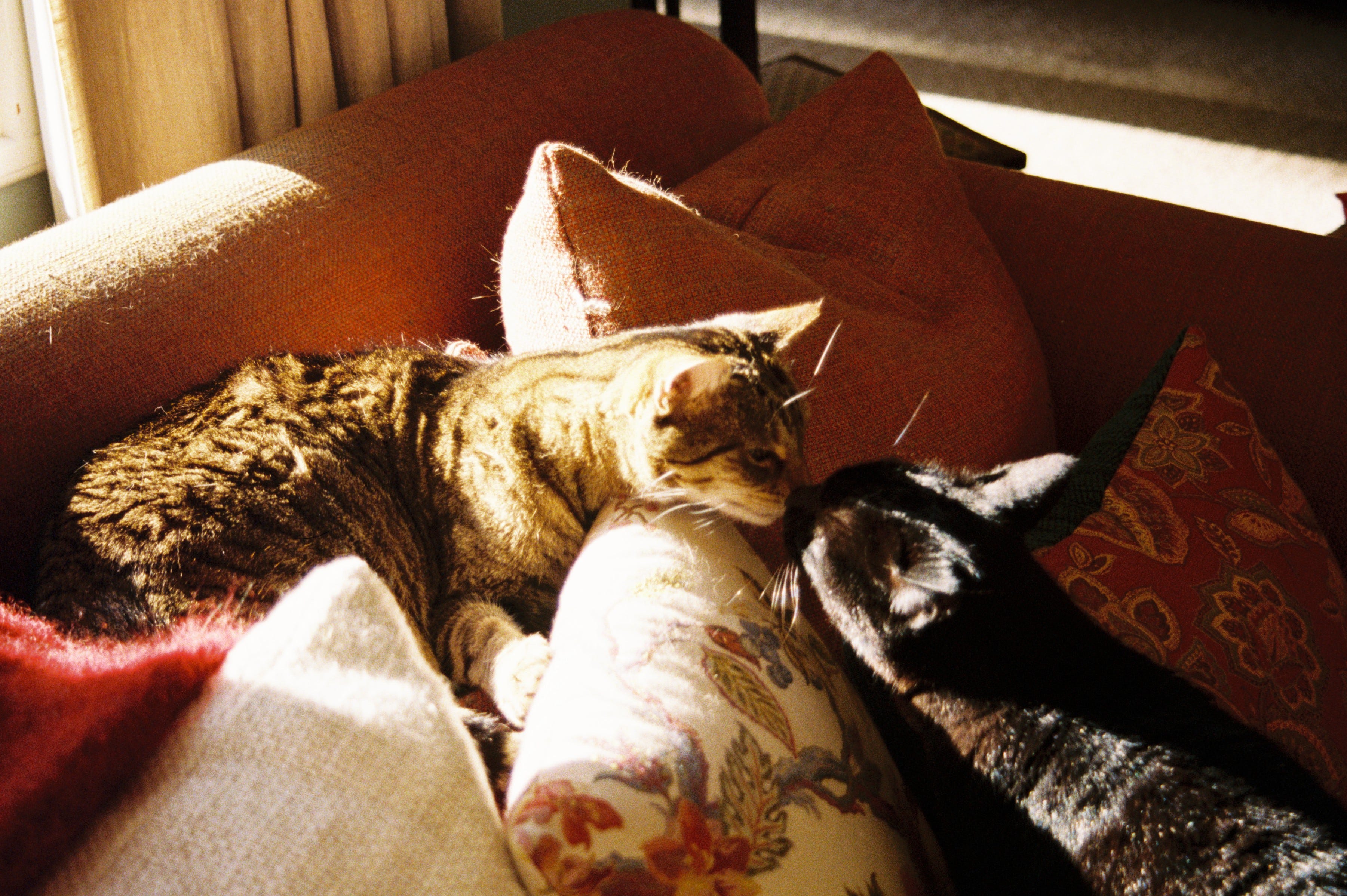
- 35mm film taken by moi, 2025.
Today, I was meant to be boarding a flight to London.
Instead, I am lying on a table with needles in my face and body.
More specifically, this flight was to get me to my Swiss sister’s wedding in Geneva next week.
Rewinding thirteen years:
She’s not my biological sister; we did exchanges and lived with each other’s families as teenagers. (The exchange cost the plane ticket + a little admin fee, making it one of the most affordable exchanges to exist). Applying for it and saving my summer pennies from strawberry packing to go was one of my best adolescent decisions.
My 17-year-old French upon returning is still the best it has ever been – there is nothing like an immersive experience in another language, especially before the time of smartphones and Google Translate. It was 2012, and I carried a physical notebook around 24/7, including to school, and was constantly pestering my new friends for translations, while slowly broadening my vocabulary in French.
Living even briefly in Switzerland, a multilingual nation (there are four national languages), I was so humbled by my own monolingualism. In New Zealand, it is impressive if you are bilingual, despite the country being officially labelled as such.*
*Thanks to a history of settler colonialism, our indigenous people fought hard just to have their language recognised in 1987. After decades and decades of oppression and white supremacist policy attempting to eradicate an entire culture, language and people.*
I am a ‘90s baby, so while my generation uses some Māori nouns in place of English words in everyday conversation, as well as some greetings, sadly, our education system is still primarily monolingual. In Geneva, all my friends were trilingual, at a minimum, and it was amazing. In many other countries in the world beyond the anglophone sphere, multilingualism is completely normal. I remain entirely jealous of those who grew up at least bilingual, despite my native English speaker privilege in the economic world.
It’s been half a decade since I’ve seen my Swiss sister. This is her wedding.
But my chronic health issues have flared badly these last few months – so with a heavy heart, I cancelled the ticket, returned to my parents’ house, and booked myself into the last form of holistic treatment that I have not yet tried in the two years since I first became ill, which is Chinese medicine.
Tuesday, September 10th 2025, 12pm:
I am lying on Vivi’s table with about a dozen small needles in my head, my face, my lower legs and my right arm, with a warm lamp heating my body. Vivi is a small, jovial Taiwanese woman with a youthful glow that defies her age. Today, we are chatting about her practice, her life and her daughter. Over the last three weeks, or for the time I have been seeing Vivi, I am slowly learning more about Traditional Chinese Medicine (TCM).
I used to see a Shiatsu practitioner in my mid-20s, who worked with the body’s meridians, and I have long been interested in holistic health – having formally studied yoga and informally studied Ayurveda – but before this treatment, I had only ever had acupuncture once in my life.
This treatment isn’t subsidised, and I am paying out of pocket, but these days, I would do anything for my energy and health back. I would do anything for my life back; I had always taken my energy and joie de vivre for granted. To wake up with a healthy, energetic body, and be able to work, exercise and socialise again is a dream. To be able to action all the creative ideas in my head!
Chronic fatigue, burnout, depression and hormonal issues have flattened the person I used to identify as myself, and destroyed the once vivacious existence I used to have. I used to be an energetic and driven person who pursued her dreams and goals with gusto; now my self-confidence and self-trust seem to have withered away. The bar for a good day is extremely low. This isn’t written for pity, just for honesty.
I’ve never felt more debilitated, miserable and powerless than I have in the lowest points of the last two years. Or more fearful that I will be stuck in this place forever. I keep trying to have a “better attitude”, but sometimes the most radical thing you can do when nothing is going your way or you’re in the trenches of despair is to let yourself be devastated.
I’m not on the other side yet; I don’t have the lessons crystallised in a pretty jar, nor can this era be condensed into a humorous anecdote about the perils of being human, till it is long behind me.
Rewinding back to September 2023:
The primary benefit of Western medicine is that it works best for acute problems that can be easily identified, such as a burst appendix or a broken bone. When I was first hospitalised two years ago, it was for severe stomach pain – that landed me in the surgical ward on morphine.
That day, I hadn’t been able to move, eat or drink any water, and eventually a friend drove me to an after-hours medical clinic to see a doctor, who, after giving me tramadol that didn’t ease the pain or severe nausea, sent me to the hospital.
It was the kind of physical pain where your spirit disassociates from your body altogether, and you genuinely don’t care what happens anymore. They scanned my organs, expecting some sort of rupture – say, of the appendix – but found nothing. No burst ovarian cysts, etc. I was discharged with “medically unexplained stomach pains”. A sympathetic gynaecologist told me that this was not an uncommon occurrence.
For weeks prior, I knew I was unwell – I’d just returned home from a stint overseas travelling, and my stomach problems had begun months prior. I’d been swept up in a less-than-healthy relationship when the stomach problems began, and I was living life in the fast lane until my body seemed to just break – or to pull the brakes.
In the weeks before my hospitalisation, I was severely anxious, had insomnia, wasn’t digesting food and was emotionally dysregulated. No matter my yoga practice, the nature walks I was taking, or the wholesome food I was eating, my entire system was in disarray.
After being hospitalised, a long investigation began. I saw various medical specialists to check that nothing was severely wrong – both sides of my lineage are plagued with autoimmune diseases and cancers. I had a colonoscopy and saw a gastroenterologist to check my gut and whether or not I was a celiac.
I saw a gynaecologist, and finally agreed to have laparoscopic surgery, which would determine, some eighteen months later, that I had/have endometriosis, which is a chronic inflammatory condition, and affects more than just the uterus.
I saw a psychiatrist and received a late ADHD diagnosis, after a dozen of my close friends all realised their neurodivergence. I consider myself pretty self-aware, and knew that this was a massive burnout cycle – and that I had lived my life clearly dysregulated – in high energy and fight or flight mode, with little rest. I was also unpacking the trauma behind this in therapy.
I fell ill, became incredibly depressed, and was given a bunch of labels that helped my understanding of what was going on at present in my body, but did not offer any scope for healing.
Fast forward two years – to the present:
Anyone who has suffered from any chronic illness knows the rocky terrain of having to take matters into one’s own hands after being let down by allopathic medicine alone. It is an inherently isolating experience.
Chronic fatigue is a nebulous term, as is depression, covering a wide range of experiences. In terms of fatigue, there are people far more ill than I, who cannot get out of bed at all.
Though I can somewhat function on some days (in terms of doing the bare minimum needed to survive), the constant exhaustion has been the most debilitating symptom of all. It robs you of the ability to do the things that make life enjoyable. It obviously impacts mood.
My body has felt like a prison, especially since surgery five months ago.
I’ve been doing my best over the last two years to heal – sleeping a lot, resting a lot, eating well, re-introducing eating meat again for energy, regularly seeing a therapist, getting outside when I can/for small walks, finding a great doctor, seeing all the specialists, getting the surgery, getting diagnoses, trying medication, taking supplements, writing for my sanity etc etc etc.
But the last few months have felt hopeless.
I called Vivi in desperation and went into our consultation with more caution than optimism. She looked at my tongue and took my pulse, and read my form. After our consultation, she told me my liver, kidney, heart, and stomach were all weak, and my chi was low. I could have cried.
I felt validated – the thing about being chronically ill for a long time is that you start to question whether you are making it up – especially when what you are going through is largely invisible to others. I knew I hadn’t felt a shred of the energy I used to have for years, and I have lived with a persistent sadness for so long that I have forgotten my formerly joyful personality.
Vivi told me all my mood and sleeping problems were a result of low chi/blood and also a weak heart, and that all of my issues stemmed from a weak stomach/poor digestion, which has probably been the case for many years/may be something I have inherited. Even endometriosis, or any hormonal dysfunction, she told me, according to Chinese medicine, is due to a weak stomach/digestive system.
In traditional Chinese medicine, the body is seen as a whole system, working together. Everything affects everything, and no symptom exists in a silo. I was so happy that Vivi had so quickly identified what needed healing in my body, because she had full confidence that we could heal my system and bring health and energy back, with some patience and regular treatment.
“Not forever”, she told me cheerfully.
“But you must have faith.”
After our first session, she sent me home with a tub of yellow powder – a mixture of Chinese herbs – to take twice a day for the next week. She also instructed me on several acupressure points that I should massage in the morning and at night.
Now every time I see her, she teaches me something new and gives me more homework/points to massage to increase my chi (energy) and that will stimulate healing in my body.
Today, whilst lying on her table, Vivi tells me about the medical system in Taiwan, when I ask if there is also Western medicine over there. “Yes,” she tells me – you can see specialists and have surgery if that is necessary, but the system is set up with a focus on preventative medicine.
“Everyone pays into a health insurance scheme”, she tells me, since they are born, monthly, and that means that all treatments are super affordable and accessible. She tells me you can book to see a specialist and see them within a few days, versus the insane waiting lists for health services in New Zealand (I waited 18 months to get laparoscopic surgery on the public health system).
Instead of the system being modelled around sick care, or the ambulance-at-the-bottom-of-the-cliff system that we have here in the West, the Taiwanese medical system focuses on prevention. People go to Chinese medical doctors to maintain their health, instead of waiting until they are very sick.
I wish I had found Vivi sooner.
She cheerfully tells me about various clients’ healing stories and asks me about what it’s like to be a photographer, which I had listed as my occupation. “Healing” is more like my current full-time occupation.
I tell her I have done lots of things across my 20s: after studying for a political science and anthropology degree, I’ve waitressed, worked at a cinema, worked in local government, worked for the Electoral Commission, taught English in France, packed kiwifruit (during the pandemic), painted houses, taught yoga, worked in business admin, taught Ethics at a university, photographed weddings, nannied, etc, around some stints overseas – studying/working/travelling.
I tell her that I am in the process of applying for my postgrad in Art therapy, and her eyes light up – “You have that interesting ADHD brain!” she tells me “Everyone I meet who has this kind of brain is so interesting and creative and does so many things! I wish I was like this!” she tells me, with a kind of awe. I blush.
“But you literally heal people! That must be so rewarding. I wish I just wanted to do one thing; had one calling”, I tell her, “but I’ve been trying to find my way, my dream life would be just to make art and live and travel and tell stories.”
Vivi smiles. “Once you’ve got your energy back, you can go after all those dreams in your head again”, she tells me cheerfully.
I leave with little pins in my ears and a new gua sha tool, alongside my next week’s worth of herbal medicine. I have new parts of the body to massage daily. I am weaning off the quetiapine I have been taking to sleep for the last year, after a horrific bout of insomnia last winter that nearly robbed me of my sanity.
I’m starting to suspect the medication is contributing to fatigue. Vivi assures me my system will need no medication in a few months, once the treatment has done its work.
I feel a tiny glimmer of hope for the first time in a long time.
Nobody is promised good days, but I hope for gentler ones.
I open the window and wonder when joy will return; it’s been so long since we’ve communed.
I pick up my green gua sha tool.
as you said, this may not be a season you wish to hold on to - but i am personally grateful that you've documented this story, in some ways it feels like you were writing my story. the ambulance at the bottom of the cliff is such a frustrating reality. i currently feel like i am slow motion falling, bouncing, down a cliff asking for help along the way, and all the gps and specialists reply "we will meet you at the bottom". I can appreciate that caution you have when you have exhausted (literally) so many options - but I cannot help but feel some hope with your current exploration. Even just the acknowledgement alone that what you are experiencing is real would feel healing in itself
As always, thank you for sharing Laura. And I'm really sorry you're going through such a difficult time. But even in the depths of what you're experiencing, your words still have meaning and help people. I have also been having a tough winter, the toughest of my life, dealing with a serious long-term injury which stops me from doing most of what I love. And of course all of the things that come up as a result of that. But reading your posts on wintering and others and some of your recommended authors has really helped me to be (somewhat) okay with slowing down. I also remember your post on letting go of lost loved which helped me immensely - I always used to cling on before. So thank you, and good luck for your healing x